| 06/18/1863 |
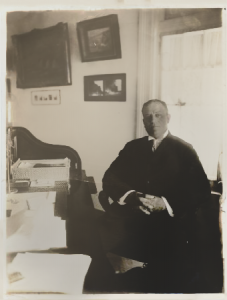
Edward Franklin Croker was born in White Plains, NY (Westchester County) |
| 03/30/1865 |
The New York City Fire Department was created by the state legislature. It was called the Metropolitan Fire Department (M.F.D.) at the time, and it wasn’t until 1870 that they started to be called the F.D.N.Y. |
| 06/22/1884 |
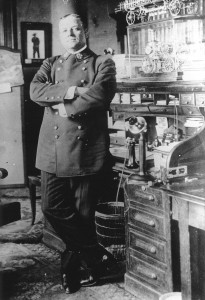
At age 21, Edward F. Croker decided he wanted to leave his job as a brakeman for the New York Central Railroad to become a fireman. After just 47 days on the job, Edward was promoted to assistant foreman (today’s Lieutenant). |
| 02/25/1885 |
Croker was promoted to Foreman (today’s Captain) of Engine Company 1. |
| 01/22/1892 |
Foreman Croker became Battalion Chief Croker. |
| 03/1896 |
Insurance groups form committee to design what will become the National Fire Protection Association (NFPA) |
| 05/01/1899 |
Edward F. Croker was appointed Acting Chief of the New York City Fire Department. |
| 06/29/1899 |
Edward F. Croker, after serving as Acting Chief of the New York City Fire Department for nearly two months was promoted by Fire Commissioner Scannell to be the Chief of the Department at the age of 36. He went on to become one of the most famous Chiefs of the Department. In announcing the promotion of Acting Chief Croker, Commissioner said that he had done so in pursuance of Section 728 of the charter which reads as follows: “The Fire Commissioner shall have power to select heads of bureaus and assistants and as many officers and firemen as may be necessary, and they shall at all times be under control of the Fire Commissioner and shall perform such duties as may be assigned to them by him, under such names or titles as he may cofer.” The preceding section of the charter states that the Commissioner shall have power to organize the department into bureaus, one of which shall be charged with the duty of extinguishing and preventing fires, the principal officer of which shall be called the “Chief of Department.” In many respects, the chief of department was a powerful figure, a brave and unencumbered truth teller who was expected to weigh in on matters of public safety. Edward F. Croker did just that, sometimes speaking out against the interests of hotel and real estate interests that influenced, if not controlled, City Hall, and resisted spending money on safety innovations that the chief called for. Before his retirement in 1911, part of Edward F. Croker’s legacy was his persistence to have new buildings fireproofed and equipped with rear doors and stairways. Croker was the first Chief who did not serve during the volunteer period. He was also the first Chief to use an automobile to respond to alarms. |
| 1901 |
As chief, Croker did his best to modernize his department, donating the first motorized chief’s car (a 1901 Locomobile dubbed “the Black Ghost” in press accounts of Croker’s exploits) and attempting to streamline communications between firemen during emergencies. |
| 09/19/1902 |
Edward F. Croker, the youthful head of the New York Fire Department, was elected by unanimous vote the President of the International Association of Fire Engineers at the Fire Chiefs convention at Grand Central Palace in New York City. (See NY Times Article) |
| 02/1908 |
Chief Croker speaking upon the death of a deputy chief and four firefighters: “Firemen are going to get killed. When they join the department, they face that fact. When a man becomes a fireman his greatest act of bravery has been accomplished. What he does after that is all in the line of work…Firefighters do not regard themselves as heroes because they do what the business requires.” |
| 1910 |
The inspirational words of Edward F. Croker which he shared with the families of fallen firefighters in 1910: “Firefighting is a hazardous occupation,” Croker observed. “It is dangerous on the face of it, tackling a burning building. The risks are plain…consequently, when a man becomes a fireman, his act of bravery has already been accomplished. Everything else is his daily duty.” |
| 1910 |
At the time of Edward Croker’s appointment as Chief of the New York City Fire Department in 1899, his uncle Richard “Boss” Croker Sr. was the head of Tammany Hall (the Democratic Party political machine that played a major role in controlling New York City politics). By 1910, many saw Edward’s position as a steppingstone to the Mayoralty. Croker denied any ambition with the following stirring words: “I have no ambition in the world but one, and that is to be a fireman. The position may, in the eyes of some, appear to be a lowly one; but we who know the work, which a fireman has to do believe that his is a noble calling. There is an adage which states that ‘Nothing can be destroyed except by fire’. We strive to preserve from destruction the wealth of the world, which is the product of the industry of men, necessary for the comfort of both the rich and the poor. We are the defenders from fire, of the art, which has beautified the world, the product of the genius of men and the means of refinement of mankind. But, above all, our proudest endeavor is to save the lives of men – the work of God himself. Under the impulse of such thoughts, the nobility of the occupation thrills us and stimulates us to deeds of daring, even at the supreme sacrifice. Such considerations may not strike the average mind, but they are sufficient to fill to the limit our ambition in life and to make us serve the general purpose of human society.”
Although Croker’s blood connections may have given him his start, he was always determined to make his colleagues forget that he had them – continually venturing the deepest into danger and dedicating himself to the study of firefighting science, construction techniques and fireproofing. His ideas were the foundation of the Fire Prevention Law of 1911. |
| 11/26/1910 |
Croker epitomized the dichotomy of the fire service; that is to put their expertise to use in fire prevention. He was an outspoken advocate of improving fire safety throughout the City’s commercial and residential buildings. As early as 1894 he testified before the Tenement House Committee that a fatal fire was due, in part, to “the combustible nature of the building and its open construction.” The culmination of this was when he used the fatal sweatshop fire in Newark, New Jersey to once again call attention to the threat of such a catastrophe being repeated in New York. |
| 03/1911 |
Chief Croker issued emergency fire rules for loft factories including the installation of sprinklers, which at that time was not yet required by law. Croker stated there had never been a loss of life in a sprinkler-equipped building. The move rallied the manufacturers to organize a campaign against the regulations as an unwarranted interference in the conduct of commerce. Business owners banded together, forming the Protective League of Property Owners, and refused to install the sprinklers due to the construction costs. The factory owners found sympathetic ears in the city government, and Croker was shortly forced to withdraw his emergency order. |
| 03/25/1911 |
Just a few days after the emergency fire rules were rescinded, Chief Croker’s worst fears would be borne out in the Triangle Waist Factory Fire, an 18-minute rag bin fire of the Asch Building (now the Brown Building of New York University) that started small but made a big mark in history. The fire trapped and killed 146 employees, most of them young immigrant girls, due to timber interiors, locked fire exits and escapes (left that way by sweatshop managers to prevent theft), overcrowding and a general disregard for safety regulations. The fire broke out at 4:40PM on the 8th floor of the 10-story building in the downtown district of Manhattan located above Greene Street at the Corner of Washington Place. The fire was started from a cigarette stub thrown carelessly by a workman on the floor which at the time was littered with clippings of shirtwaist material scattered about an un-swept factory. (See NY Times Article on Triangle Waist Factory Fire – Dated 7/27/1913) |
| 05/01/1911 |
After the Triangle Waist Factory Fire, suspecting that he could do little to advance his cause within the politicized tangle of government red tape, Croker turned over his command to Deputy Chief John Kenlon at 8:00AM. Edward F. Croker served twelve years the Chief of the New York City Fire Department and for twenty-seven years as an active fireman. Croker’s twenty-seven years of service had seen the administration of twenty-two Commissioners. |
| 05/01/1911 |
Immediately upon his retirement Fire Chief Edward F. Croker, creates and becomes President of “Croker National Fire Prevention Engineering Company” a fireproofing and fire safety consulting and manufacturing firm specializing in fire prevention services and the manufacturing and supply of fire protection devices and interior fire equipment, most notably soda / acid fire extinguishers (including one titled the “Chief Croker” extinguisher) for the protection of buildings throughout the United States. Among the services provided, were instituting and conducting fire drills at big manufacturing plants. The company is headquartered at the Thorley Building at 562 Fifth Avenue (located at 46th Street and Fifth Avenue). (See Croker National Fire Prevention Engineering Company Advertisement)
The Chief ran the company like his own fire department. Croker began operations with a staff of sixty men, each of whom had seen twenty years’ of service in the city department. All the employees were former FDNY members who wore uniforms, including a hat with badge. The company also had a promotional give-away item…a book of matches. Perhaps the Chief had a sense of humor. The company was also referenced / documented as “Croker Fire Prevention Construction Company” and “Croker Fire Prevention and Engineering Company” however it was later commonly referred to as “Croker Fire Prevention”.
By 1922, the headquarters were relocated to 22 West 30th Street in Manhattan (See Business Card – Front / Back). |
| 10/1911 |
To commemorate the 40th anniversary of the Chicago Fire, the Fire Marshals Association of North America proclaimed the nation’s first Fire Prevention Day to promote public awareness of fire safety. Fire-awareness programs and parades were held throughout America. |
| 1912 |
A New York City Fire Department Fire Prevention Bureau was established. The new Fire Prevention Bureau was a reflection of the growing understanding of the importance of keeping fires from happening by educating people and promoting safety codes. |
| 08/30/1912 |
Edward F. Croker, former Chief of the New York Fire Department was elected Generalissimo of the Long Beach Fire Department. Chief Croker stated that he proposed in the near future to call out the men under his command regularly every night for drill. In Long Beach, he had within ten days a fire combination truck, a staff of ten prominent volunteer firefighters, and a uniform of black trousers, blue shirts and red helmets, designed so that wealthy volunteer firemen could wear their uniform to social functions and not have to go home to change in case of a fire. |
| 10/1912 |
Edward F. Croker writes a 354-page book titled “Fire Prevention” published by Dodd, Mead & Co. and sells for a price of $1.50. “If I were to be asked to name the one great need, the one vital problem of the United States today” declared the ex-Chief of the New York City’s Fire Department to the New York Times, “I should answer without hesitation, ‘Fire Prevention.’ “ |
| 1914 |
Croker constructed what was believed to be the first “completely fireproof” home in the world, located at 116 Lindell Boulevard in Long Beach, NY on Long Island (corner property at Lindell Boulevard and West Penn Street). The housewarming party he held on October 30, 1914 was covered in the New York Times. According to the Times’ story, Croker brought all his guests to the second floor of his home, where the walls, floors and rafters were made of cement, the doors, trimmings and furniture of metal, and, interestingly enough, the carpets and furniture coverings of asbestos. He poured a couple of gallons of gasoline into a room, lit a match and then shut the room’s metal door and dined with his guests in the next room. The fire was confined to the room, and beyond a reported crack in the metal wire of the room’s window, the room remained undamaged. |
| 03/25/1914 |
Marking the third anniversary of the Triangle Fire and at the request of Fire Commissioner Adamson, fire drills were conducted in schools and factories throughout New York City. Ex-Fire Chief Croker supervised fire drills in many factories throughout the city. (See NY Times Article) |
| 10/08/1922 |
Croker exclaims to the New York Times “Although modern fire extinguishing methods have been highly perfected, too little attention has been paid to the vital matter of preventing fires, and it must be borne in mind that the cost of fires is greater than the cost of fire prevention.” (See NY Times Article) |
| 1925 |
President Calvin Coolidge declared Fire Prevention Week an official national observance. Ever since, the Sunday through Saturday period containing the October 9 anniversary of the Chicago Fire has been the focus of an annual fire-safety-awareness campaign sponsored by the National Fire Protection Association (NFPA). |
| 05/06/1947 |
In 1947, President Harry S. Truman called for, hosted, and participated in the “President’s Fire Prevention Conference of 1947.” The participants in the conference were some of the brightest minds in America at that time. The purpose of the meeting was to identify ways to prevent fires. However, what evolved out of that meeting was the application of a military concept in dealing with safety. That concept was identified as the “3 E’s,” engineering, education, and enforcement and it applied well to fire safety.² The purpose of education is ultimately to change behaviors. Fires have for too long been generically categorized as “accidental.” For instance, the cause of a fire is blamed on a misplaced candle or materials placed too close to a furnace. The candle or furnace caused the fire not the person originally behind the action. Responsibility must be correlated between actions and persons with fire. Nearly all fires can be prevented with the “3 E’s. Education is the most cost-effective fire suppression activity the fire service can engage in. By preventing fire from ever starting, costs to municipalities and the overlooked costs to citizens devastated by fire are dramatically reduced. |
| 02/07/1951 |
Chief Croker died in Lindenhurst, New York (Long Island) at the age of 87. |
| 1959 |
“Croker Fire Prevention”, one of the leading fire prevention companies in the United States was absorbed by “Fire-End Products” (founded October 20, 1931, and headquartered in Elmsford, New York). Under the direction of brothers Anthony and Joseph Sposato the company is later renamed to “Fire-End & Croker Corporation”. |
| 09/07/1972 |
President Richard Nixon states “The Commission on Fire Prevention and Control has made a good beginning, but it cannot do our work for us. Only people can prevent fires. We must become constantly alert to the threat of fires to ourselves, our children, and our homes. Fire is almost always the result of human carelessness. Each one of us must become aware-not for a single time, but for all the year-of what he or she can do to prevent fires.” |
| 01/18/1973 |
New York City adopts Local Law 5 for fire related emergencies. Included in this law are the requirements for High Rise Office Buildings to create and maintain a Fire Safety Plan, perform regular Fire Drills and have certified Fire Safety Directors on site whenever there is greater than 100 persons in the building. |
| 06/13/1975 |
The Fire Drill division disbands from “Fire End & Croker Corporation”; Stanley Janovici becomes the President of “Croker Fire Drill Corporation”. Over the course of the next two decades, Croker Fire Drill Corp shows steady growth becoming an industry leader in fire and life safety consulting throughout New York and the surrounding communities. |
| 1982 |
The Fire Department of the City of New York (FDNY) opens to women firefighters. Forty-one (41) women were sworn in and became the first to serve as uniformed members in the 117-year history of the Fire Department. |
| 03/27/1984 |
New York City adopts Local Law 16. Included in the law are provisions for hotels and motels within the five boroughs to create and maintain a Fire Safety Plan, perform regular Fire Drills and have certified Fire Safety Directors on staff 24 hours a day, 7 days a week. |
| 01/01/1999 |
Ray Weinstein becomes the fifth President / CEO of Croker with offices headquartered in Islip Terrace, New York (Long Island). Over the next decade, Croker shows rapid growth throughout the states within the northeast region. |
| 09/11/2001 |
The September 11 attacks (often referred to as nine-eleven, written 9/11) were a series of coordinated suicide attacks by al-Qaeda upon the United States resulting in 2,974 American casualties. On that morning, 19 Islamist terrorists affiliated with al-Qaeda hijacked four commercial passenger jet airliners. The hijackers intentionally crashed two of the airliners into the Twin Towers of the World Trade Center in New York City, killing everyone on board and many others working in the building. The hijackers crashed a third airliner into the Pentagon. The fourth plane crashed into a field near Shanksville in rural Somerset County, PA, after some of its passengers and flight crew attempted to retake control of the plane, which the hijackers had redirected toward Washington, D.C. There were no survivors from any of the flights. |
| 10/20/2003 |
The continual growth and success of Croker’s healthcare services division, marked the birth of “Croker Fire Safety Corporation”, providing a dedicated team and resources to expand services in healthcare facilities throughout the northeast region. |
| 06/24/2004 |
In the aftermath of the terrorist attacks on the World Trade Center (September 11, 2001), the 2001 anthrax attacks and the Northeast Blackout of 2003 (The largest blackout in North American history – August 14, 2003), New York City introduces Local Law 26 including bold new provisions in life safety throughout the city. These initiatives include (but are not limited to) emergency power supply to exit signs, photoluminescent markings in exit stairwells and expanded sprinkler requirements. Local Law 26 also outlines new FDNY Emergency Action Plan (EAP) protocols to be further researched and promulgated. |
| 04/06/2006 |
The FDNY enacts new Emergency Action Plan (EAP) procedures/protocols requiring High-Rise Office buildings throughout New York City to have plans, drills and FDNY certified EAP Directors for non-fire related emergencies. |
| 05/08/2008 |
Croker Fire & Life Safety Institute, Inc. is launched with FDNY accredited classes teaching Fire Safety Director and Emergency Action Plan Director candidates throughout New York City’s five boroughs. Classes are held at 188 Madison Avenue in Manhattan (adjacent to the Empire State Building). |
| 08/12/2009 |
Topps (aka: The Topps Company, Inc) best known as a leading producer of trading cards, released its American Heritage Edition, which is a 150-card set loaded with notable people – who it deems the “the most courageous, valiant, progressive and enlightened American women and men in our nation’s history.”
The base set utilizes famous Topps designs from the 1960s and the 1980s – focusing on Military Heroes (card Nos. 1-10), Political Heroes (11-20), Civil Rights heroes (21-30), “The Bravest” (31-40), “The Finest” (41-50), Heroic Groups and Movements (51-60), Heroes of Medicine (61-70), Humanitarian Heroes (71-80), Diplomatic Heroes (81-90), “Pen is Mightier than Sword” (91-100), Heroic Events (101-125), and finally Kindred Heroes – a 25-card set pairing Barack Obama and Abe Lincoln.
The founder of Croker Fire Drill Corporation, Edward Croker, was featured in this prestigious collection as card #34 (See image of Topps card / See image of limited edition Chrome Topps card). |
| 07/12/2010 |
Croker launches an Architectural and Engineering Services division employing an in-house team of professionals to create and update floor plans and riser diagrams. These expanded services immediately prove to be beneficial throughout NYC, empowering Croker to deliver all-encompassing solutions to keep buildings in code compliance, while streamlining efficiencies and providing a cohesive, seamless deliverable for all plan documents. |
| 05/01/2011 |
Croker celebrates 100 years of service in the fire and life safety industry. |
| 03/25/2016 |
Croker’s headquarters are relocated to Hauppauge, New York (Long Island) |
| 07/13/2016 |
Brian L. Weinstein becomes the sixth President of Croker. |
| 04/01/2018 |
Providing an expanded purview with greater depth of services, Croker officially launches “Croker Risk Management” delivering an array of services including, but not limited to, corporate seminars, working groups, training and exercises for emergency response, crisis management and business continuity. |
| 03/28/2022 |
Croker joins Altus Fire & Life Safety (“Altus”), which is a full-service fire and life safety services platform offering a complete suite of solutions, from the design, engineering, installation and servicing of state-of-the-art fire and life safety systems, to training, consulting, crisis management and business continuity services. |
| Present |
Servicing some of the most well-respected corporations and real estate management groups in the largest and most prestigious buildings throughout New York City’s five boroughs and throughout the northeast region, Croker Fire Drill Corporation and Croker Fire Safety Corporation currently service in excess of a 3,000 building, 475 million square foot portfolio marking the largest fire and life safety consulting company throughout the country. |